一脸懵比:length() 以及 size_t

刚刚刷 leetcode 的时候又发生了一件灵异事件:
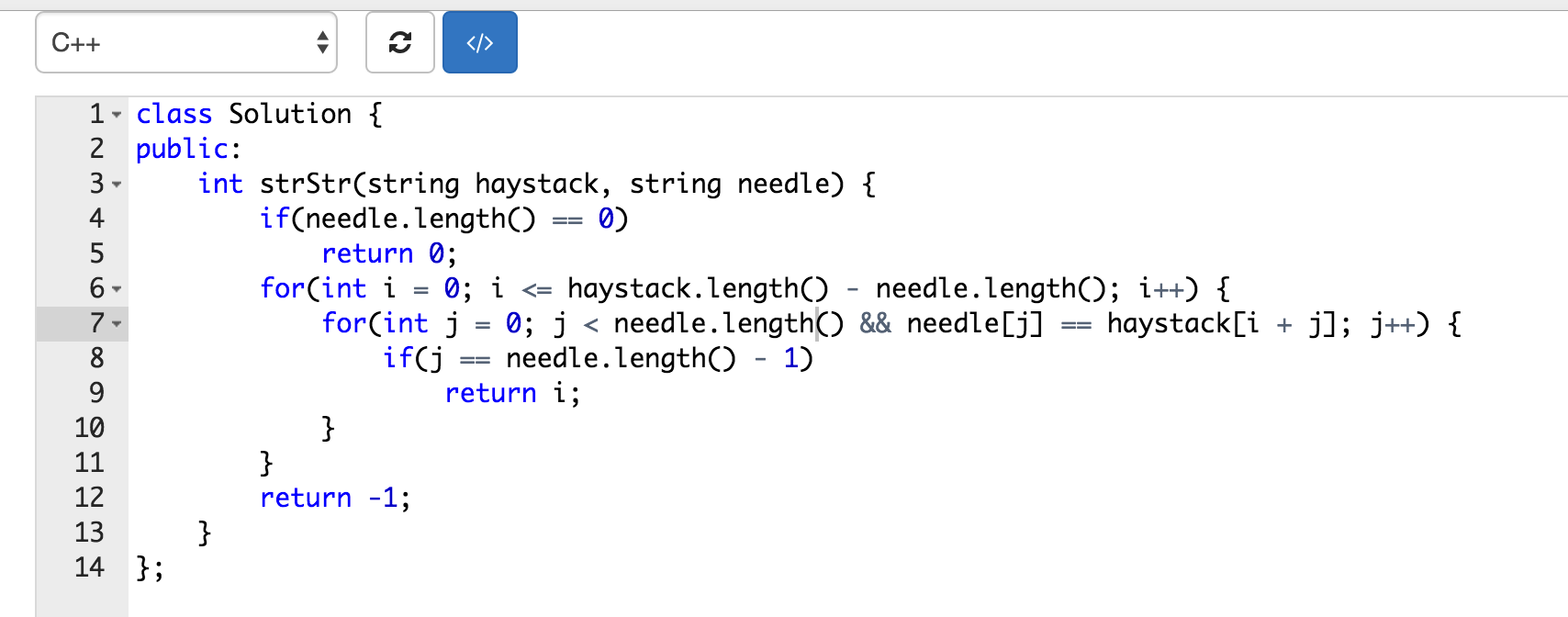
Snip20160420_20

//题目很简单:

Implement strStr().

Returns the index of the first occurrence of needle in haystack, or -1 if needle is not part of haystack.

但是报错了:
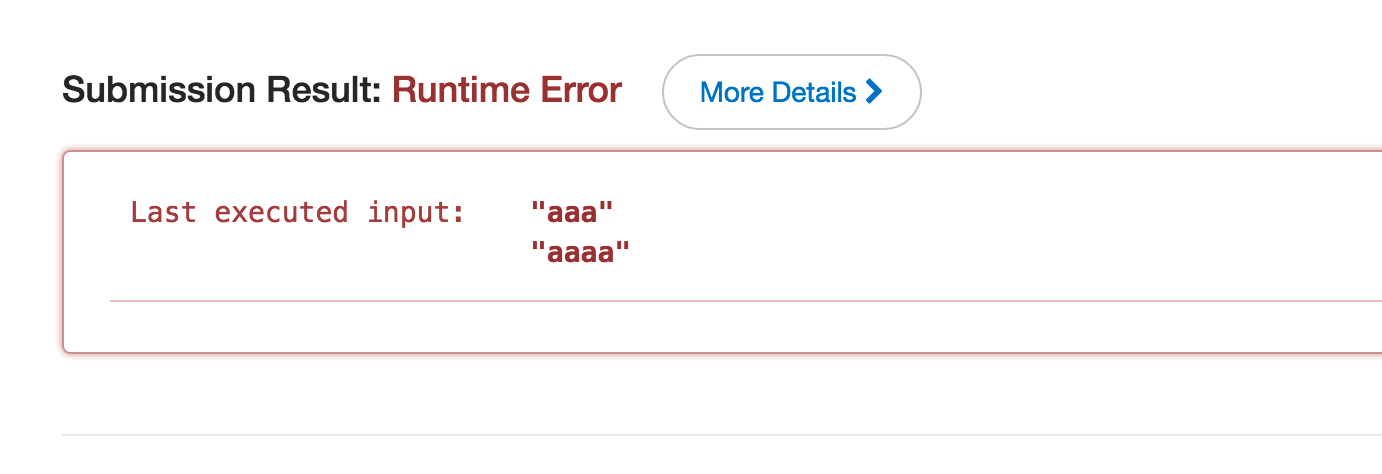
Snip20160420_21

奇怪点不在这,在于如果我把 两个.length()替换成 int 型的len1和 len2,就 Accepted了。。

就是写成这样就对了:

Snip20160420_22

啊,为什么。。。为什么。。什么都没干啊只是等价替换了啊。。

a82aa4a836975b078e8d_size71_w440_h774

后来机智的我想起,原来在 IDE 里面编程的时候,每次用 .length()会有警告提醒:

Snip20160420_26

size_type。。。

Snip20160420_29

所以说在 unsigned 情况下,如果两个 length()相减,得到的是一个好大好大的值,因为unsingned和unsigned相减得到unsigned的数,也就是如果是负数的话得到的是int的最大值那样的数,但是在转为 int 型之后就会允许相减得到负数,是这样的么。。。验证一下:
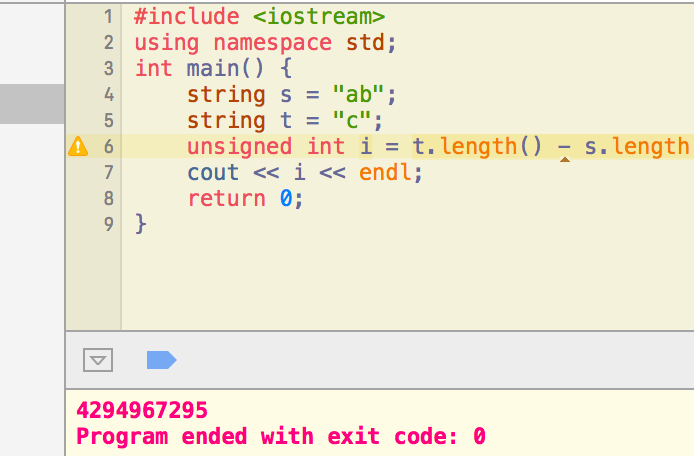
Snip20160420_32

啊,我怎么可以这么机智~~(`・ω・´)

746-160311154339~~~~~~~~~~~~


LeetCode 28. Implement strStr()

Implement strStr().

Returns the index of the first occurrence of needle in haystack, or -1 if needle is not part of haystack.

LeetCode 67. Add Binary

Given two binary strings, return their sum (also a binary string).

For example,
a = “11”
b = “1”
Return “100”.

LeetCode 234. Palindrome Linked List

Given a singly linked list, determine if it is a palindrome.

Follow up:
Could you do it in O(n) time and O(1) space?


LeetCode 225. Implement Stack using Queues

Implement the following operations of a stack using queues.

push(x) — Push element x onto stack.
pop() — Removes the element on top of the stack.
top() — Get the top element.
empty() — Return whether the stack is empty.
Notes:
You must use only standard operations of a queue — which means only push to back, peek/pop from front, size, and is empty operations are valid.
Depending on your language, queue may not be supported natively. You may simulate a queue by using a list or deque (double-ended queue), as long as you use only standard operations of a queue.
You may assume that all operations are valid (for example, no pop or top operations will be called on an empty stack).
Update (2015-06-11):
The class name of the Java function had been updated to MyStack instead of Stack.

LeetCode 42. Power of Four

Given an integer (signed 32 bits), write a function to check whether it is a power of 4.

Example:
Given num = 16, return true. Given num = 5, return false.

Follow up: Could you solve it without loops/recursion?

Credits:
Special thanks to @yukuairoy for adding this problem and creating all test cases.